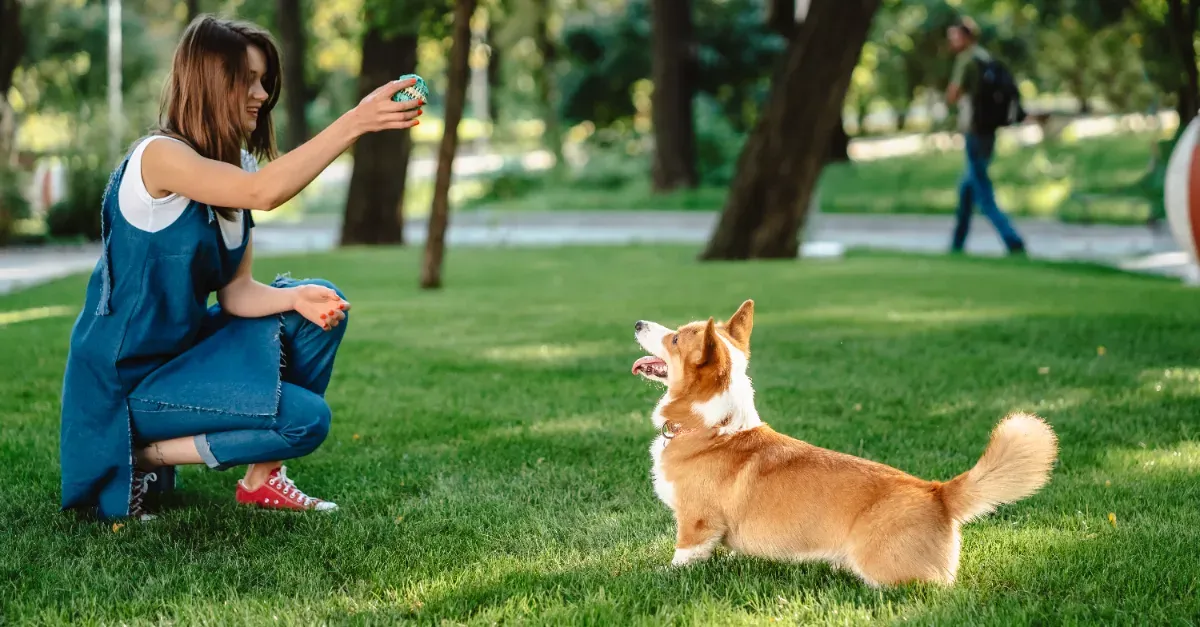
This concerns, first of all, the relationship with wildlife, which has its natural, protected habitat in the park.
The dog is the animal species that left the wild the longest ago to live alongside humans. Precisely for this reason – without any responsibility on its part, of course – it can interfere negatively with wildlife in many ways.
Let us not forget that, as a descendant of a predatory species, the dog is still capable of chasing and killing species, even those of high conservation value. But with its mere presence, its roaming about with the great physical energy and curiosity it possesses, the dog can alter the behaviour of prey species. For example, it can distract them from feeding, or even weaken their anti-predator instinct.
Besides these direct impacts, there are more indirect ones that are no less potentially harmful. Such as the transmission of pathogens, or the biological interference that can be caused by residues of anti-inflammatories and antiparasitics, which we give our dogs to protect them from diseases and parasites. Once released into the environment through faeces, they cause the destruction of countless forms of wildlife.
So, if the park is our chosen destination for a more or less long and demanding walk with our four-legged friend, these are the rules and good practices to follow:
- Let us check the website of the park or protected area beforehand, to know exactly whether and where we can go. We should not be disappointed or irritated if we read that bringing dogs into the territory of a national park of very high natural value (and therefore with a very fragile balance) is forbidden, perhaps with some exceptions, such as valley-floor roads and, only in the summer period between 15 July and 15 September, some paths leading to mountain huts (as is the case in Gran Paradiso National Park).
- Let us always keep the dog on a lead (we will come back to this later, when we talk about correct behaviour with dogs in mountain areas in general).
- Let us ALWAYS pick up droppings, even on a path or track, and dispose of them in the appropriate bins on our return;
The example of the PNGP (Gran Paradiso National Park)
The restriction on dogs’ access to the PNGP areas is linked to the possible transmission of pathogens to wildlife.
As Liliana Costanzi, a PNGP collaborator, explains, “infectious diseases are natural regulating factors of wild animal populations and some can become a threat to the conservation of wildlife, especially when they are able to influence the population dynamics of the affected species”.
A large number of pathogens can affect wild carnivores; most of them are shared with domestic species, sometimes causing epidemics that lead to dramatic reductions in population density.
“Studies on the role of domestic dogs in the epidemiology of the diseases most harmful to wildlife,” Costanzi admits, “are still few, and most were carried out in North America, where the environmental characteristics, human habits, extent of habitats and, therefore, the potential overlap between wildlife and domestic animals are considerably different from those found in the Alps”.
Precisely for this reason, careful health surveillance “becomes essential in areas where domestic and wild animals coexist, because the overlap greatly increases the risk of infection and spillover”.
How has Gran Paradiso National Park managed this in recent years?
“We adopted,” Costanzi explains, “a multidisciplinary and multi-species approach to the problem in order to identify the possible risks to wildlife conservation linked to the presence of domestic dogs.
Various diagnostic tools and targeted sampling were used to assess the health of domestic dogs, foxes and some species of mustelids living in the park’s territory, in particular to highlight the presence of pathogens that are a threat to wildlife conservation, such as: Neospora caninum, Toxoplasma spp., Leishmania spp., Leptospira spp., Salmonella spp. and the viruses of Distemper (CDV), Parvovirus (CPV), Coronavirus (CCV), Adenovirus (CAV), Herpesvirus (CHV) and Lyssavirus (Rabies)”.
Numerous domestic dogs live in the park’s territory (52 sheepdogs and 25 companion dogs, belonging both to tourists and to officers of the Surveillance Corps). “The results showed that the dogs that live in and visit the park are potentially responsible for the spread of three important pathogens: canine distemper virus, Toxoplasma sp. and Neospora caninum”.
In particular, sheepdogs turned out to be the main threat to the health status
of wildlife, since they are exposed to multiple pathogens because of their lifestyle and the contamination of the environments they frequent (stables and farms).
It has nevertheless been shown that “even companion dogs, although vaccinated and subject to regular
veterinary care, can contribute to the spread of these pathogens, highlighting the importance of regulating their access to protected areas, whose primary purpose is to
preserve biodiversity and improve the conservation of wild species, in particular
those threatened with extinction”.
So let us follow the rules. For our own good, for our dogs and for the environment. And if we sometimes have to give up an outing we have long dreamed of on the map, let us accept it in the name of a higher interest: the balance of the ecosystem, which, as we know well, does not always coincide perfectly with our desires and our established habits.