While the risk of wildfires in a country like Italy is significant throughout the year,
we know full well that in the summer the danger of fire for woods and
forests increases markedly.
During the last fire season (from 15 June to 15 September 2023), almost 75,000 hectares of land were
damaged by fire (ISPRA data). Of
these, almost 11,000 were covered by forest ecosystems.
It is an impressive figure. But note this: the damage caused by fires can
fall by 50% in managed areas. Woodlands certified for sustainable forest management
are up to 9 times less likely to be affected by fires
than non-certified ones.
This is what emerges from the latest study commissioned by PEFC, an acronym that stands for
‘Programme for the Endorsement of Forest Certification schemes’:
a global organisation of national forest certification systems.
The research is entitled: ‘Active governance of agro-pastoral, forest and
protected areas mitigates the impacts of wildfires in Italy’. Coordinated by Prof.
Davide Ascoli of the University of Turin and signed by the main players in the
sector, including Antonio Brunori, Secretary General of PEFC Italy, the research
analysed Italian territory in relation to fire hazard. The result is
clear: rural development, agro-pastoral activities, sustainable forest management and
active nature play an important role in the impact of fires on the land.
Of the 48,953 fire events analysed in Italy, for a total of 999,482
hectares of burnt area in the study period between 2007 and 2017, the results
suggest that active governance of the land has helped to build
fire-resistant and resilient landscapes in Italy over recent decades.
What were the positive actions? They are the policies provided for by the Rural
Development Programme; forest certifications; biodiversity conservation
programmes, such as those provided for in the Life Programme (one of the European Commission’s ‘historic’ programmes,
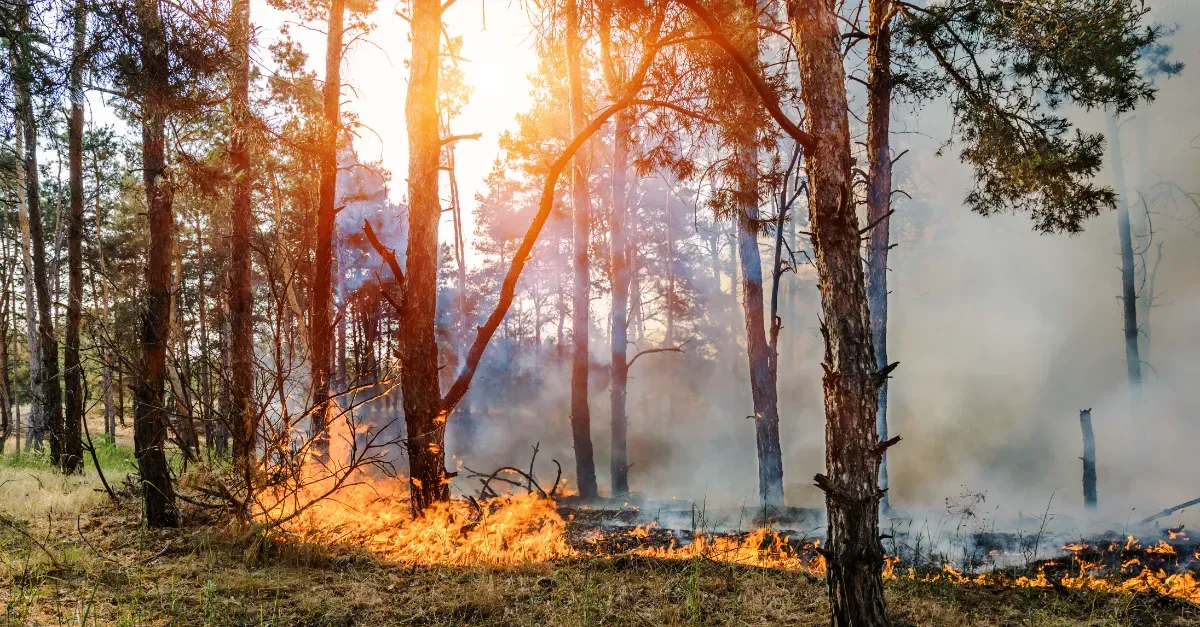
The usual summer of wildfires? When forests are managed, fire damage is halved
A PEFC study shows that Italian woodlands certified for sustainable management are 9 times less likely to be hit by fires
Show more Show less
operating since 1992. The European Union’s main financial instrument
dedicated to the environment and climate action).
‘Climate change is unfortunately more and more often the cause or a contributing cause of
disastrous fires that are hard to control, and it is clear that activities are needed to help regulate and contain the loss of ecosystem services and of
forest cover’, explained Marco Bussone, President of PEFC Italy.
It is ‘inattention to our woodland and pasture heritage’ that has weakened us,
Bussone went on to say, leaving a great many hectares of forest abandoned to a wild and
risky state.
It is therefore urgent to act. And yet, ‘of the 100 million euros allocated
by the Fires Decree in September 2021, the Ministry for Territorial Cohesion has
still to distribute about 40 million. These resources are more than necessary, because
they must be spent on prevention, with targeted investments in activities across the
territory and inside the woods themselves’.
Antonio Brunori, Secretary General of PEFC Italy, has no doubts: ‘The data collected and
analysed in the study firmly confirm that the European
Green Deal strategies are the only way forward’. To limit fire
damage, the remedy is ‘a governance system that recognises the key role of
land management in ensuring civil protection and the conservation of
ecosystems in the presence of climate change and changes in land use’.
Meanwhile, the Italian fire summer, up to mid-August,
shows a mixed picture.
On the peninsula and the islands there have been more fires, but of smaller size. The blazes
have hit some southern regions and Lazio more than in previous years, but the
areas affected have not increased. Credit goes to the promptness of
interventions and to prevention at regional level.
Unfortunately we remain first in Europe for the number of fires, even if the areas
covered by the events are smaller than those of other countries.
So say the satellite data of the European Effis-Copernicus system. In all, 254 episodes were
recorded nationally (fires involving more than 30
hectares of land), for a total of 28,634 hectares of burnt land (data updated
to 8 August), equal to 24% of the episodes recorded across Europe.
Romania, Spain and France have fewer fires recorded, respectively 230, 170 and
148 from January to date. The negative record also stands over the long term: the
2006-2023 average shows 290 episodes a year in Italy, followed by the figures for
Portugal (205) and Spain (203).
The figure for burnt area, on the other hand, is ‘in Italy’s favour’ compared with the other
countries: about 28,000 hectares in Italy in 2024, fewer than in Bulgaria and Spain
(about 38,850 and 34,000 hectares respectively). The 2006-2023 average, at
about 56,700 hectares burnt every year in our country, is also lower than the
records of Portugal (93,736 hectares) and Spain (81,623 hectares).
Ask the article
Beta
It answers only with what is written above and in the related articles of Greentomeet. If a piece of information isn't there, it tells you so.
Hello. I can summarise this article, explain a passage or tell you what Greentomeet has already published on the same topic.
Continue reading
Ecosystem →

NASA and NOAA sound the alarm over the accelerating rise in sea level, particularly along the US coast. …
Machine translation