The series promises to be of particular interest, because it stems from an extraordinary piece of documentation carried out by the director Vanni Gandolfo over some thirteen years of filming. Thirteen years in which the incredible story of the made in Italy start-up of Marco Astori and guy Cicognani was recorded almost day by day, as if foreseeing that it would have an adventurous life, to say the least.
But what is the story of Bio-On (for which the last word has not yet been written)?
It is a story that begins in Emilia, in Bologna. Its protagonist is Marco Astorri, Emilian through and through, an advertising graphic designer by profession, with a dream: to produce a bioplastic that destroys itself. Needless to say, if he succeeded, it would be one of the most sensational technological breakthroughs of the millennium, something like having a new Apple in one’s hands. Or, as someone put it, ‘the Google of plastic’.
Astorri drags a friend into the venture, the Italian-French Guy Cicognani. After a stay at the University of Hawaii in Honolulu to find the perfect material, the two return to Bologna and found Bio-on.
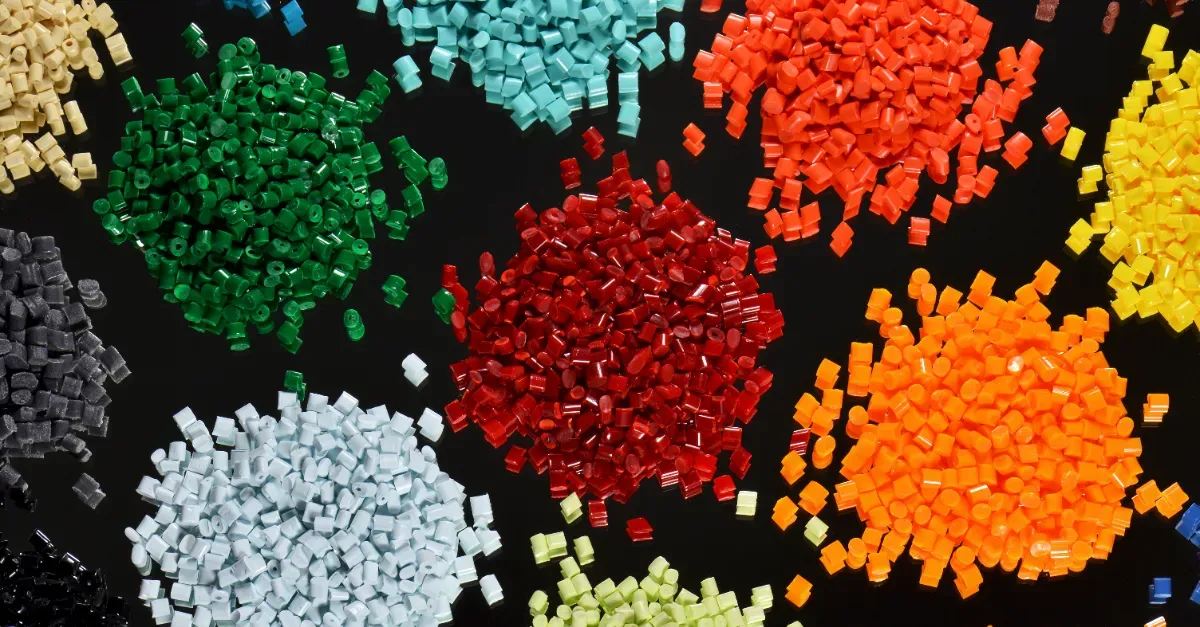
‘Bio-on’s basic product’, the company explained in its presentation, ‘is called Minerv-PHA (polyhydroxyalkanoate) and is a polyester made from agricultural processing waste, thanks to the bacterial fermentation of sugar: it is the bacteria that produce the polyester. It can replace all types of plastic: polyethylene, polypropylene, polystyrene, PVC, PET. It biodegrades 100% if left for a few days in ‘living’ water at room temperature, in rivers or seas’.”
The Bologna company aimed ‘to make its contribution to building a more sustainable future for everyone, in everyday plastic objects. The secret is in the name, Bio-on: switch on the BIO! ‘Turn OFF pollution’!’
Thanks to its fully degradable plastic, Bio-On also promised to clean the seas completely of oil pollution.
During the 2017 G7 Environment meeting, Astorri and his team claimed that, with the technology called ‘Minerv biorecovery’, the particles of the product thrown into the sea formed a porous structure ‘that hosts colonies of dormant bacteria present in the marine environment, awakening them. These, feeding on it, multiply and grow stronger, and then attack the oil’. The first tests carried out by the CNR’s Institute for Coastal Marine Environment in Messina certified that biodegradation really did start, five days after application, while the clean-up took twenty.
In short, there was enough to stir the enthusiasm of the industrial world, the environmental world, and the investors too. Bio-On’s climb to the heights of finance was indeed an impressive one.
Launched on the AIM in 2014 at a price of €5 a share, Bio-On reached, in an impressive rush, a peak price of €70 a share and a capitalisation of over a billion euros.
The company seemed to have become one of those stars of the financial firmament with an ever brighter and, above all, secure future.
And yet – as in films set on Wall Street – only a few months after its peak, in December 2019, the company was declared bankrupt by the Court of Bologna, dragging its investors down in a spectacular crash.
The accusation, as happens in such cases, was that of having built a house of cards, and Marco Astorri was detained. From there began the legal case, still ongoing.
In these five years everything has happened, from white-hot court hearings with an exchange of accusations and unexpected revelations, to the rebirth of the company and the brand.
Bio-On’s bankruptcy trustees, after the go-ahead from the Bankruptcy Court of Bologna and with the prior favourable opinion of the creditors’ committee, signed the deed transferring the business to the newco Haruki Spa, 75% controlled by Maip Compounding and 25% by Plastotecnica, both belonging to the Maip Group.
The court proceedings concerning the company’s top management remain open, however, with the addition of a charge of tax evasion.
But what is the truth? Were Astorri and his people skilful conjurers, or did someone manoeuvre in the shadows to make Bio-On collapse, since it had evidently annoyed more than one powerful competitor?
According to those who support the second theory, it is striking that Bio-On’s troubles began when the company was targeted by an investment fund based in New York, Quintessential.
In July 2019 Quintessential published a report significantly titled ‘Bio-On: a Parmalat in Bologna?’, declaring that it had opened a short position on the stock and had ‘an interest in the fall in the price’ of Bio-On.
In the report the fund states bluntly that Bio-on is ‘a house of cards’, ‘a scheme devised by management to enrich itself on the backs of shareholders’.
What appears to be a successful company, with growing turnover and profits, is in reality ‘a great bubble, based on improbable technology, with turnover and receivables essentially ‘simulated’ by means of a network of empty shells’. So pronounces the American fund.
Bio-On’s founders immediately tried to defend themselves with a detailed press release rebutting the accusations point by point.
But it was no use. The day after the report was published, Bio-On’s shares crashed on the Milan stock exchange.
The shares lost 70% of their value, falling from €50 to €15.
In a few days Bio-On’s capitalisation ‘evaporated’ by around €700 million: Bio-On went down to a capitalisation of €300 million, when a few days earlier it had been worth over €1 billion.
It was the beginning of the end. Just a month later, the Bologna prosecutor’s office opened a file on the case.
Cui prodest? one would say in situations like this. The hypotheses are many and highly varied, just as in a spy story or a political-financial ‘thriller’. Astorri and his people have always proclaimed their innocence and good faith. For them it is clear that this was ‘a premeditated speculative attack’.
There is therefore enough to expect a TV series full of twists and even sensational revelations about the intertwining of industry, technology, finance and big capital: in the style of the great investigations from across the ocean, which are ever more gripping, and often instructive, for the global public.