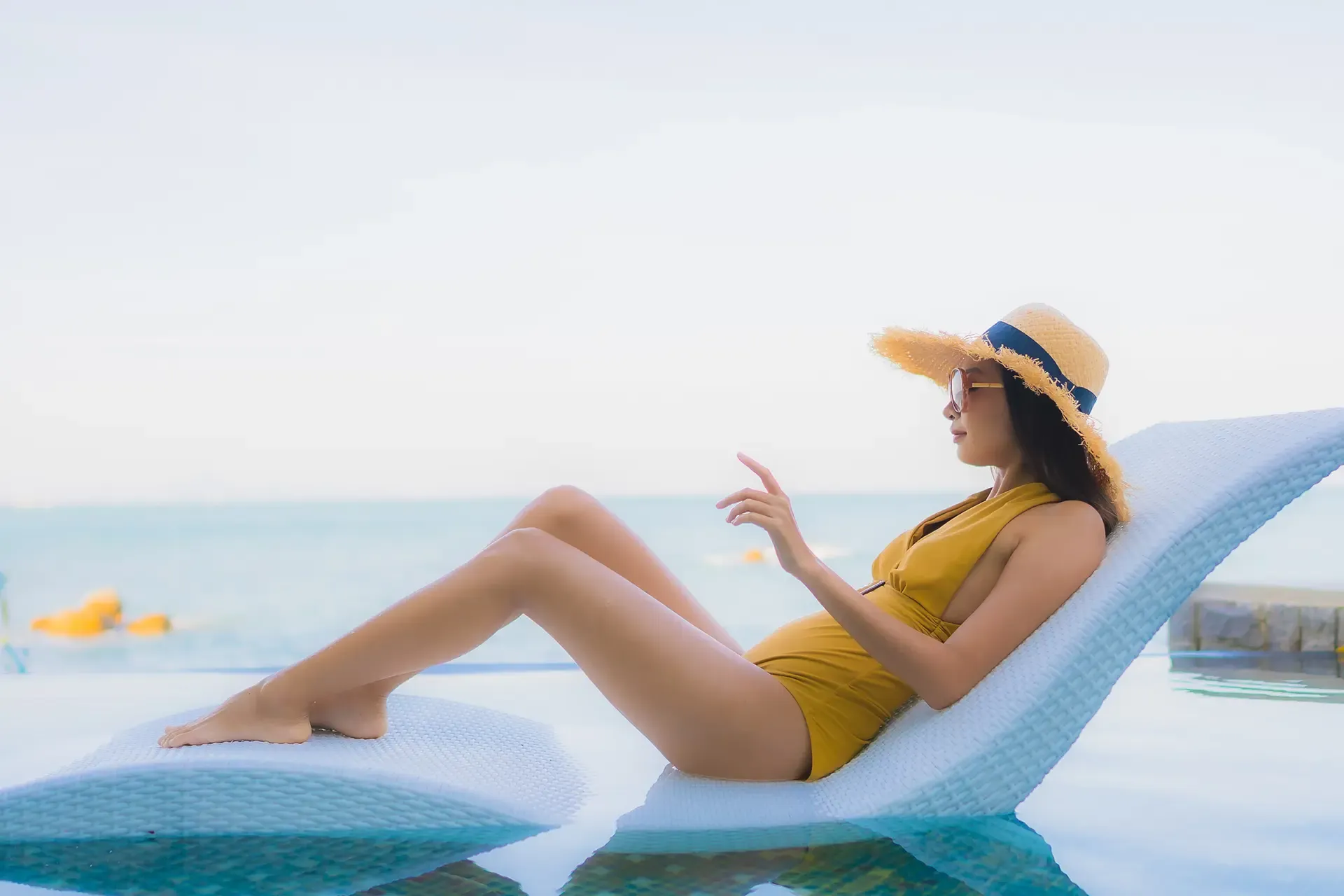
When you reach the beach, the spectacle is that of the Mediterranean in its
purity. Transparent sea, in shades of turquoise and blue. Golden sand, shells,
dunes protected by fences. A few equipped areas, but they are not too intrusive.
Randello is home to several protected species: above all, the beloved Caretta
caretta turtle.
Here the animal has found, fortunately and thanks to the cooperation and care
of human beings (for once), one of the most important places for
nesting.
The clean, soft sand; the low night-time lighting (essential so as not to
disorient the hatchlings); the low tourist numbers have encouraged the
“miracle” of numerous nests appearing in recent years.
For this reason the beach of Randello is now a regular setting for educational events with
students, as well as for spectacular and moving public releases of specimens
that have been rescued and rehabilitated.
How to get to Randello
If you are free to travel in spring or autumn, that is certainly the ideal time to
explore the Randello Reserve. The climate is a little milder and nature bursts with
colour.
To reach the Reserve, set off from Ragusa or Scoglitti and follow the
signs for Punta Braccetto. Shortly before the village, there is a small
signposted entrance to the reserve: leave your car in the car park outside and
continue on foot along the path through the pine wood, for about 10 minutes’
walk.
The Vendicari Reserve
You have to travel some sixty kilometres north-east, in the
direction of Syracuse, to come across the other natural wonder of eastern
Sicily: the Vendicari Nature Reserve.
If it is true, as has been said, that the secret of the Sicilian landscape lies in that
fusion, which seems constitutive and innate, between sea and stone, here the stone is well
represented by the quarries, dating to the 5th century BC, which lie south of Eloro, not far
from the beach of Marianelli.
From these quarries came the building materials for the temples and monuments of
Eloro, in fact: a sub-colony of Syracuse mentioned even by Pindar
in the Nemean Odes. A land of fierce wars, if it is true that right here, on the upper
course of the river Tellaro, Hippocrates, tyrant of Gela, defeated the Syracusan
forces in battle in 493 BC, and the Syracusans in turn defeated the Athenians (battle
of the Assinarus, 413 BC).
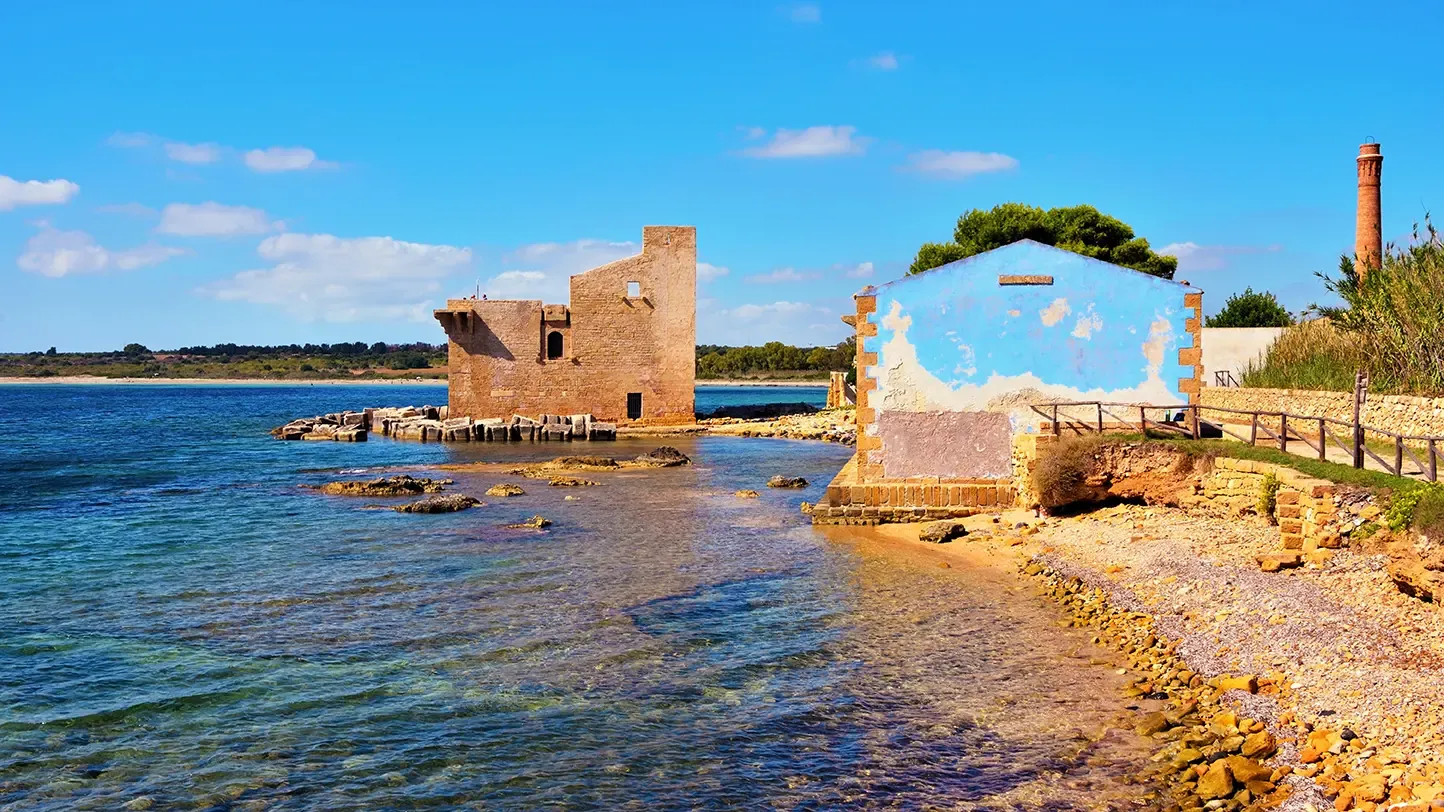
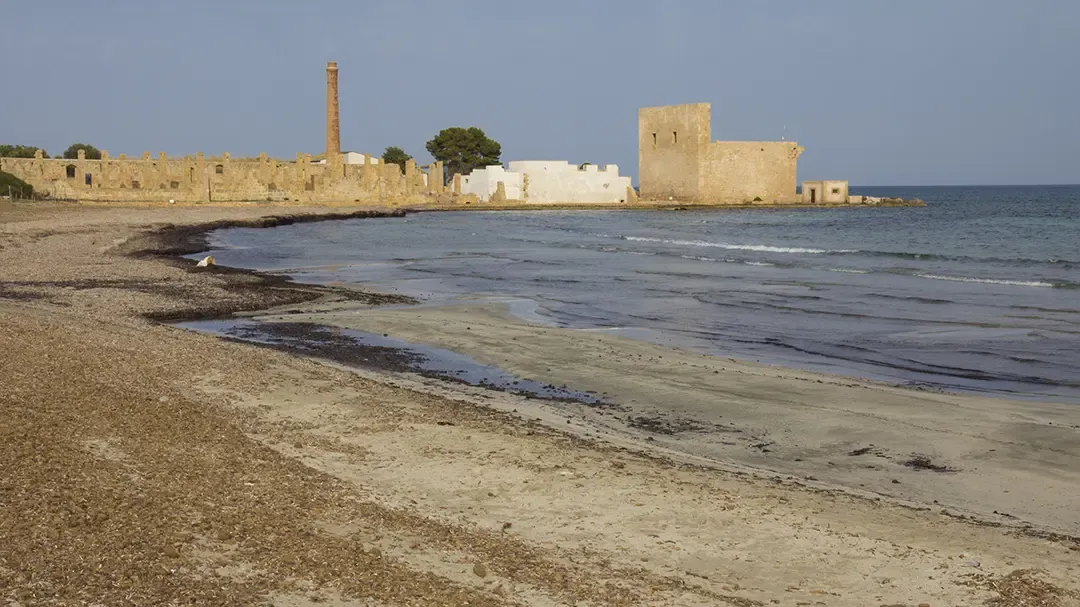
But the ancestral memory of stone is also in the tanks used for processing
tuna not far from the Swabian tower, beside which a
small necropolis has also been discovered.
A testimony to an activity that characterised the area for centuries, the tanks are
rectangular or square, with sturdy, deep walls. They were filled
with seawater or used for fermenting and preserving tuna.
There are several access points from which to enter the Vendicari reserve.
The Eloro entrance is the northernmost: a short path runs alongside the San Nicola stream, near
the remains of the ancient Greek city of Eloro.
After about 300 metres you reach the beach of the same name. A strip of sand, surrounded
by a Mediterranean thicket of plants such as sea rocket, sea medick, caltrop
and sea lily.
At this point, the walk along the beach southwards to the
mouth of the river Tellaro is not to be missed.
And when we mention the river Tellaro, we cannot avoid a digression – and a physical
digression too, in the sense of making a detour to visit it – to that
archaeological treasure which is the remains of the 4th-century AD Roman villa known
as the Villa del Tellaro.
The home of a family of large landowners, it still preserves, albeit fragmentary,
astonishing mosaic floors, among the finest examples of ancient mosaic art
anywhere.
Though incomplete, the mosaic floor of the eastern area is striking with
its depiction of the ransom of Hector’s body. The scene must have been
the weighing of Hector’s body – of which only the lower
extremities survive – placed on one pan of the scales, with the other pan filled with the
gold of the ransom.
In the central part of the portico, the mosaics depict kraters from which bands of
leaves, fruit and flowers rise and join in an arch above four rectangular panels. In
each panel a dancing Maenad and a Satyr are depicted.
The last mosaic depicts scenes from a hunt. In the centre is a
female figure, associated with the personification of Africa, seated on a rock and
surrounded by trees. In the lower part of the mosaic the banquet is depicted,
with the game laid out on the table.
But let us return to the Reserve.
The beaches of Marianelli and Calamosche are then not to be missed.
Marianelli is reached from the northern part of the reserve, along about 1.5 km of
a narrow dirt track that starts from the SP19.
The path then leads in 450 metres to the ticket office; another 400 metres brings you to
the shore.
But it was worth it. The beach of Marianelli is the most isolated and therefore the wildest
in the Reserve. Its dunes, preceded by almond and lemon groves, are dotted with
green: you will find marram grass, cotton lavender, sea lily and sand couch grass.
In summer the water is incredibly warm, as well as crystal clear. Naturism is practised here
naturally, so do not be scandalised. If you are, the place is not for you.
The third and last of the entrances in the northern part of the reserve leads to the
equally enchanting beach of Calamosche.
If we tell you that in 2005 it won the title of “Most beautiful beach in Italy” from
Legambiente’s Blue Guide, you can believe it.
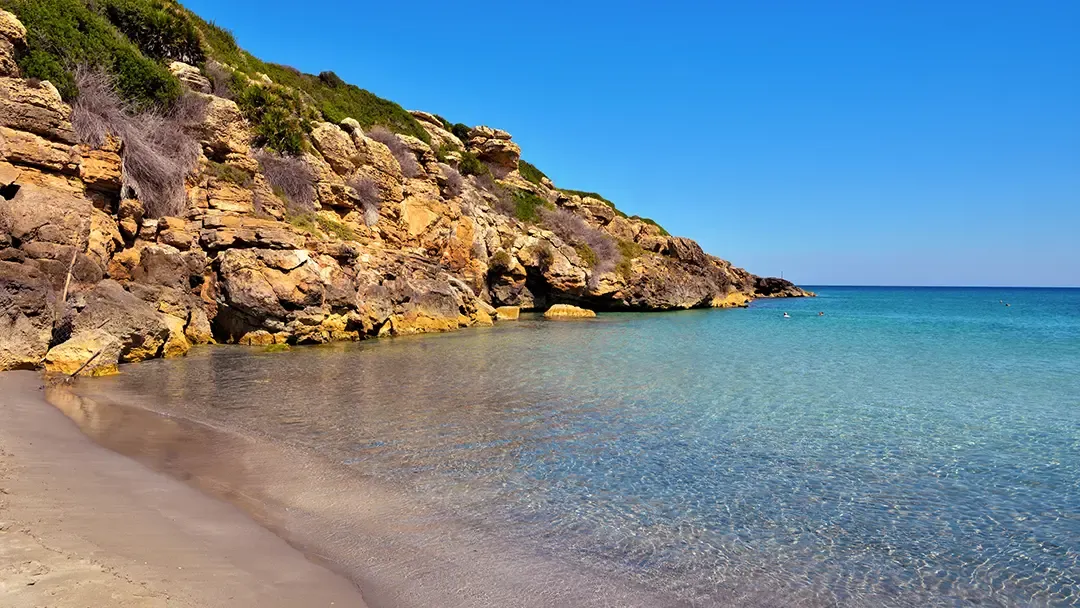
Calamosche, or “Funni Musca” in the local dialect, is a cove set between two
rocky headlands. Here the coast is indented and rich in headlands and natural
nooks. Imagine a bay of fine golden sand, surrounded by cliffs of white
limestone and rock, creating a sheltered and intimate setting.
The waters are crystal clear, an intense, transparent blue, perfect for swimming, for
snorkelling among the small caves and nooks of the two headlands, or simply for
relaxing in the sun. In the heart of a protected area.