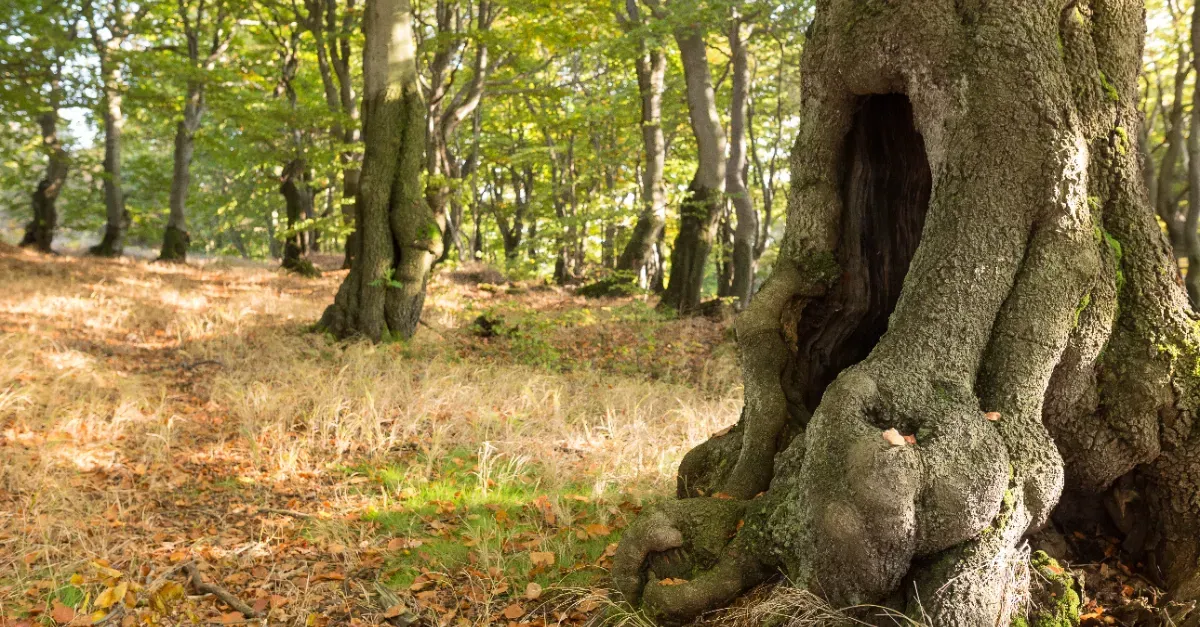
The criterion by which UNESCO chose to preserve the ancient beech forests of the Carpathians and other regions of Europe is the following: they are “outstanding examples representing significant ongoing ecological and biological processes in the evolution and development of terrestrial, fresh water, coastal and marine ecosystems and communities of plants and animals” (UNESCO - Ancient and Primeval Beech Forests of the Carpathians and Other Regions of Europe).
The inclusion of these beech forests, of unique ecological, historical and cultural value, in the UNESCO list is essential, as it protects them from deforestation, illegal building and other harmful human activities.
For the very purpose of protecting them, these beech forests are often not accessible in their entirety, but only partially: there are nonetheless plenty of paths to follow, and the bodies in charge of managing them offer numerous services, such as guided trekking, cycling routes and educational and awareness-raising activities.
Fans of green, relaxing holidays in contact with nature therefore need not worry. On the contrary, taking refuge in an ancient beech forest can be an original travel idea, perfect for those who want to rediscover a sense of communion with creation. What is more, there is no need for long, tiring and polluting journeys, as our Peninsula is full of beech forests, from North to South.
Looked after and protected thanks to the creation of protected areas or national parks, our ancient beech forests are the following:
- Valle Infernale, in Aspromonte National Park (Parco Nazionale Aspromonte);
- Cozzo Ferriero forest, in Pollino National Park (Parco Nazionale Pollino);
- Foresta Umbra, in Gargano National Park (Parco Nazionale Gargano);
- ancient forest of Monte Cimino, in the province of Viterbo (Faggeta del Monte Cimino);
- Monte Raschio forest, in Bracciano-Martignano Regional Natural Park (Parco di Bracciano);
- beech forests of Valle Cervara, Selva Moricento, Coppo del Morto, Coppo del Principe and Val Fondillo, in Abruzzo, Lazio and Molise National Park (Parco Nazionale d'Abruzzo);
- Sasso Fratino Strict Nature Reserve, in the National Park of the Casentinesi Forests, Monte Falterona and Campigna (Parco Foreste Casentinesi).
Characterised by majestic, centuries-old trees that reach impressive heights, these woods, a true paradise for flora and fauna, play a fundamental role in preserving biodiversity, being an ideal habitat for numerous species of plants and animals, many of them also at risk of extinction.
Consider, for example, the Italian or Gargano roe deer, the smallest Italian cervid, which is found only in the Foresta Umbra, in a few hundred individuals.
Ancient beech forests, moreover, are true green lungs of Europe, as they also have an important ecological function, helping to regulate the climate, purify the air and absorb carbon dioxide, and helping to counter climate change by preserving the balance of the ecosystem.
In short, an ideal place to organise a slow holiday, rediscovering a heritage of inestimable value for us and for the planet. These stunning woods are, in fact, witnesses to an ancient time, when humans had not yet left their mark on nature. A walk among these trees reminds us of the beauty and power of creation, and invites us to care for it with respect and gratitude, so that future generations too can continue to marvel at these wonders.