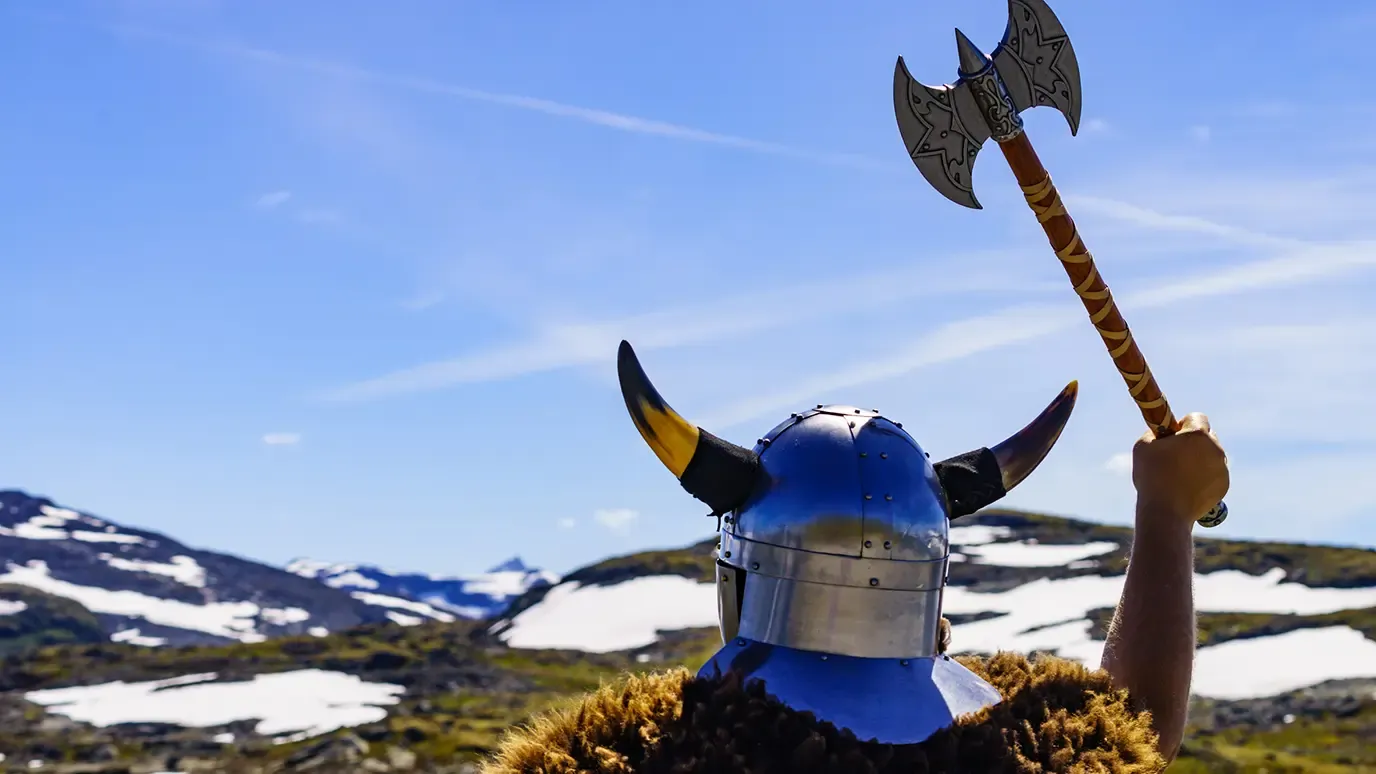
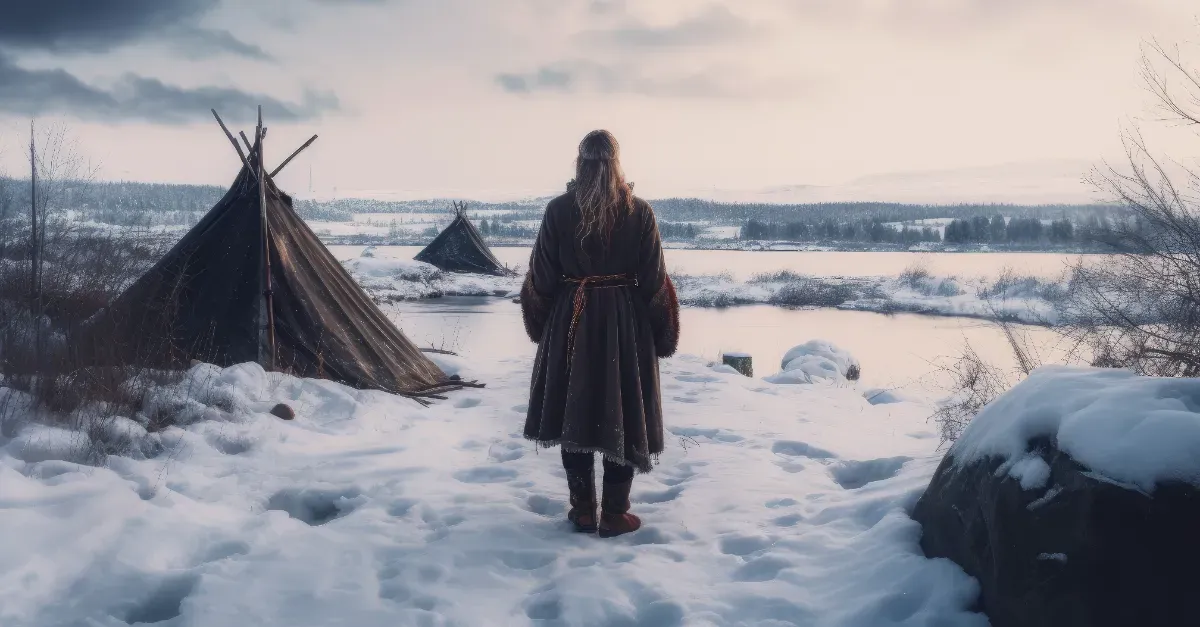
In the heart of the Middle Ages, during what climatologists call the “Medieval Warm Period”, there was indeed a climatic anomaly that made the North Atlantic – Greenland included – surprisingly mild. The Vikings took advantage of the moment, settling on the island’s southern coasts, where they even managed to farm and keep livestock.
A real stroke of climatic luck, in short. But it was regional luck. That warming, as scholars such as Michael E. Mann explain, was not global, nor comparable to today’s levels. While northern Europe warmed a little, in other parts of the world the climate was actually colder. The tropical Pacific Ocean, for example, remained rather cool. Hardly a planetary heatwave.
Nor did it last very long: around the 14th century, in fact, an opposite period began, the so-called Little Ice Age, which brought frost, snow, sea ice and, with them, the isolation and decline of the Viking communities in Greenland. A regional cooling which, like the earlier anomaly, depended on complex natural factors that cannot be replicated today. Neither by wishing it, nor, even less, by denying reality.
And yet, the story of the Vikings in Greenland remains fascinating precisely because it shows how far a human group can read – and in part ride – the climatic context of its time. Sources such as the “Saga of Erik the Red” and the excavations at the sites of Brattahlíð and Gardar tell of a well-structured settlement, made up of turf houses, cultivated fields and even attempts to trade with the Norse world. A civilisation that not only knew how to navigate prodigiously, but also tried, at least for a while, to grow a stable community in difficult conditions.
When the climate then turned cold, the Vikings did not adapt quickly or effectively enough. Some scholars suggest that the stubborn insistence on replicating the Nordic model – based on livestock farming and agriculture – instead of drawing on local practices (as the Inuit did) contributed to the abandonment of the settlements. Others speak of difficulties in trade and political isolation. The fact remains that Greenland went back to being what it is for much of the year: white.
Today the global climate follows different logics, on a different scale. But that is another matter. The story of the Vikings in Greenland tells us something interesting about the relationship between environment and society, rather than about current warming. And perhaps that is where it is worth looking, before brandishing the club of the anecdote to win the climate war with a quip.
But if we want to award a point to the critics of climate change, at least for the tenacity with which they manage to bring up Erik the Red in every discussion... fine.
1-0 to them.
Yes, it was warmer in the time of the Vikings.
Selected bibliography
- Diamond, Jared. Collapse: How Societies Choose to Fail or Succeed. Viking Books, 2005.
→ Analysis of ancient societies, including the Viking settlements in Greenland, and of their relationship with the environment. - Jones, Gwyn. A History of the Vikings. Oxford University Press, 2001 (updated edn).
→ Standard reference on the history and expansion of the Viking peoples, with historical and cultural context. - Roesdahl, Else. The Vikings. Penguin Books, 1998.
→ Archaeological and historical approach to Viking civilisation, with attention to Arctic settlements. - Mann, Michael E. The Hockey Stick and the Climate Wars: Dispatches from the Front Lines. Columbia University Press, 2012.
→ Defence of the climate reconstruction of the last thousand years and of the distinction between medieval and modern warming. - Jones, Phil D., Roberts, Neil. The Holocene: An Environmental History. Third Edition, Wiley-Blackwell, 2014. Briffa, Keith R.