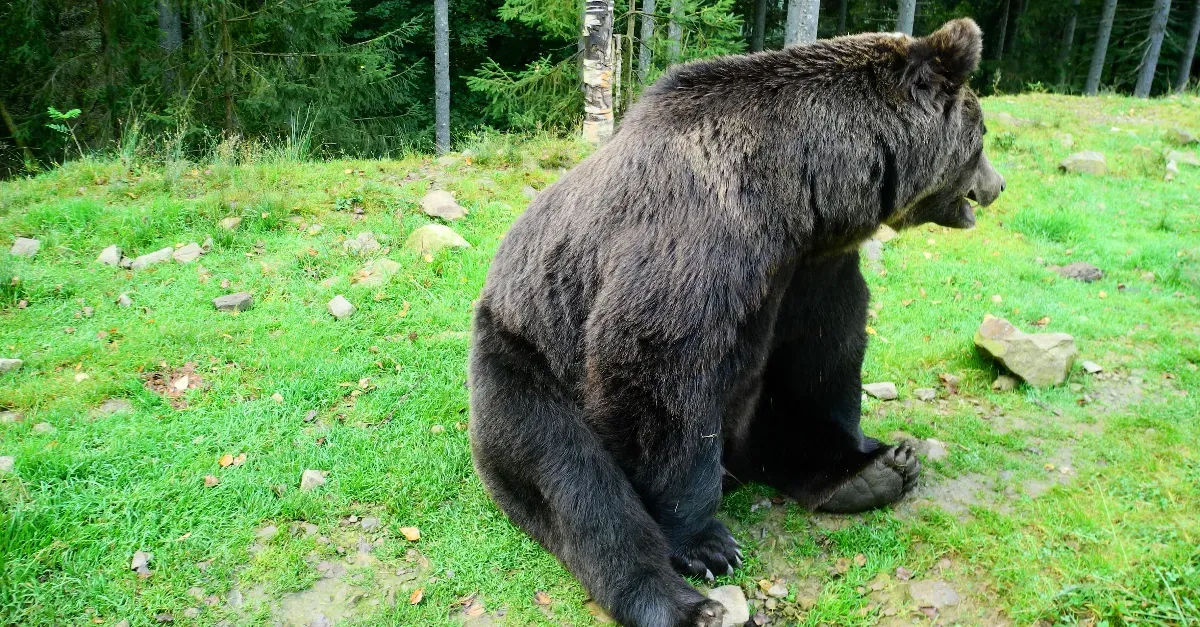
The Bucharest government, the journalists tell us, explained in a paper that “over the last decade the Romanian bear population has increased greatly, to between 7,000 and 8,000 individuals, compared with an optimal level of 4,000”. Romania hosts about two thirds of Europe’s bear population and over 10% of its wolves (about 3,000). The repopulation of large carnivores has led to more conflicts with humans: the problem of coexistence with pastoralism and livestock farming weighs especially heavily.
Romania “asks for adequate additional funding under the Common Agricultural Policy and beyond, for various measures such as monitoring systems and automatic compensation for farmers in case of losses”. But it also suggests that “quota-based hunting is not incompatible with efforts to conserve the bear and the wolf, provided it is accompanied by monitoring in line with scientific standards and by long-term management plans”.
The Bucharest proposal, the authors of Europe Matters tell us, has apparently found favour not only with Prague and Bratislava, but also with Rome, Paris, Vienna, Athens and Helsinki. “Only Berlin is said to have clearly opposed a change to the legal framework. EU Commissioner Sinkevicius pointed out that the current rules already allow derogations permitting the capture and killing of wolves and bears, and that the Commission is carrying out an assessment of the situation of the wolf in Europe (taking into account all scientific opinions), the results of which will be presented by the end of the year”.
“At the plenary session, the European Committee of the Regions presented a study on coexistence with large carnivores, produced together with the European Parliament, which takes a snapshot of the situation. The EU territory currently hosts five species of large carnivores: the wolf (Canis lupus), the brown bear (Ursus arctos), the wolverine (Gulo gulo), the Eurasian lynx (Lynx lynx) and the Iberian lynx (Lynx pardinus). The main threats to these species, the report explains, are the endangering of the habitats in which these animals live, through fragmentation, loss and degradation (caused in particular by the development of transport infrastructure, the expansion of human settlements and intensive agriculture); illegal hunting; persecution by humans; and the shrinking of the prey base”.
According to the Habitats Directive, “species enjoying ‘strict protection’ may not be deliberately captured or killed, nor may they be disturbed (with particular attention during breeding, hibernation and migration periods); eggs must not be destroyed, and breeding or resting sites must be respected. Member States must also establish systems to monitor the accidental capture and killing of protected animal species. There is now a risk,” the journalists conclude, “that some of the protected animals will lose their status in part”.
Europe Matters also gives us a few figures: “In 2016, the scientific experts of the Large Carnivore Initiative for Europe specialist group reported that Europe was home to 17,000-18,000 brown bears (15,000-16,000 in the EU), about 17,000 wolves (13,000 to 14,000 in the EU), 1,000 to 1,250 wolverines (600 to 800 in the EU) and 8,000 to 9,000 Eurasian lynx (7,000-8,000 in the EU)”.
Turning back to the Italian situation, the newsletter tells us that the Province of Trento “on 30 June proposed three amendments to the regulation on large carnivores (Law 9 of 2018, which the government challenged before the Constitutional Court), providing that between capture and killing the choice will always be culling”.
In conclusion, the solution that would allow “greater coexistence with large carnivores” has not yet been found. One possibility is “to increase compensation for the damage suffered by farmers, which many states already provide. But the principle that the habitats of these species must be respected must also be defended. The risk now is that in the campaign for the European elections to be held in June 2024 this issue will take on ideological overtones, with on one side the farmers’ ‘party’, backed by the EPP, which wants to reduce protections, and on the other the environmentalists’ ‘party’, backed by the Greens, Socialists and the left, which defends them. Leaving little room for scientific assessments”.
In other words, the two great camps taking shape on the horizon of the next, decisive elections, which will decide a good part of the continent’s future.
(You can subscribe to Francesca Basso and Viviana Mazza’s newsletter “Europe Matters” here: https://www.corriere.it/newsletter/?intcmp=emailNLcor_rassegna_7luglio2023)