Skiing and winter tourism: a pairing to rethink
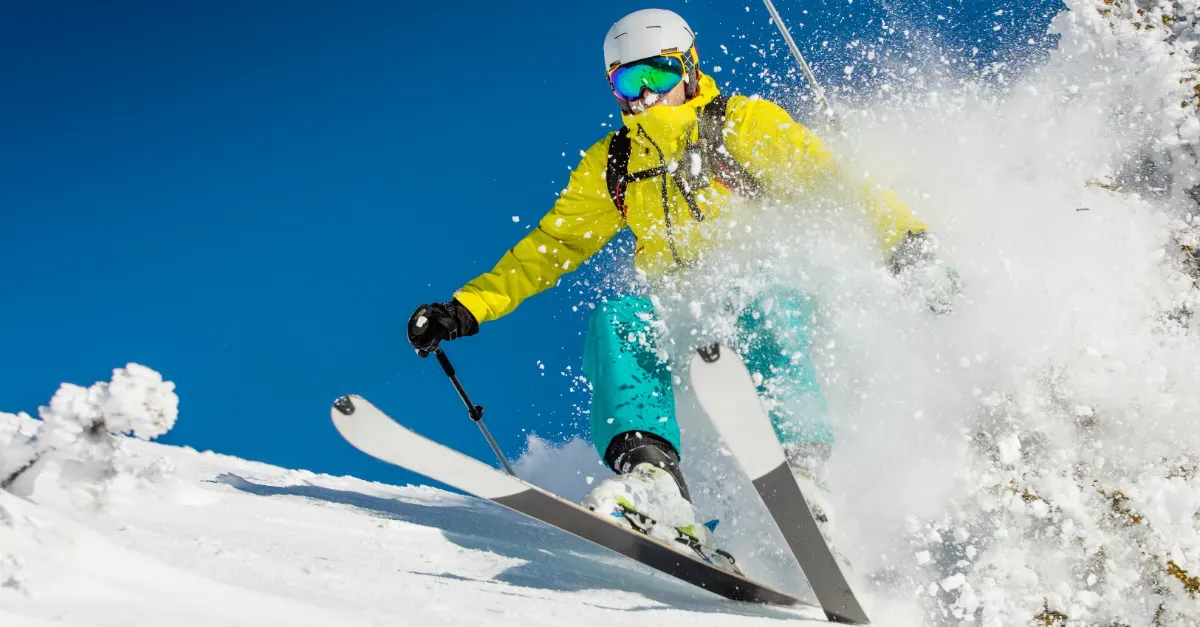
Italy boasts a good 5,700 km of ski runs, and the peak influx of skiers is between January and February, during the classic ski weeks. But it may be time to rethink these winter holidays and make them ‘greener’. How? By abandoning the idea of “snow at all costs” and opening up to alternative experiences. Walks, snowshoeing, sledging, ski mountaineering and cross-country skiing are just some of the many activities that allow us to enjoy the mountains in a sustainable way.
Artificial snowmaking is a sore point. Producing artificial snow requires large amounts of water and energy. As early as 2004, a CIPRA study reported that around 95 million cubic metres of water and 600 gigawatt hours of energy were used in the Alps every year. Today, these figures have undoubtedly increased. Besides consuming precious resources such as water, this practice also affects costs for operators and skiers.
One solution could be the exclusive use of renewable energy for snowmaking and the testing of new technologies for more sustainable artificial snow.
Snow holidays: a new approach to planning may be needed
In France, the State has for decades planned holiday periods so as to spread the influx of tourists across ski resorts more evenly. This is a model that could prove useful today from an environmental perspective too, avoiding peaks of pollution and making it possible to make the best use of natural resources without resorting to unnecessary artificial interventions. We could start organising our holidays by following the weather rather than the official public holidays, finding real snow and enjoying the mountains in keeping with the seasons.
The most environmentally friendly ski resorts in Italy
Although there is no comprehensive data with which to draw up a ranking of the most eco-friendly resorts, some places stand out more than others for their sustainable practices. One example is the San Martino di Castrozza-Passo Rolle area, in the Paneveggio Pale di San Martino Natural Park. Here, the cable cars and lifts run on hydroelectric power, and even the snow cannons use water resources sustainably.
Alpe Cimbra
Alpe Cimbra is the ski area of Folgaria, Lavarone, Luserna and Vigolana (100 km of ski runs). In the area, a free ski bus service is available throughout the winter: skiers can conveniently get from their hotels, B&Bs and apartments to the lift departure stations.
In addition, since the summer of 2022, the eco-friendly GREEN CARD project has offered a rich calendar of excursions, environmental activities, ecology workshops and the chance to buy local zero-mile products at discounted prices.
Racines
The three splendid valleys (Val Giovo, Racines and Ridanna) that make up the Racines area, on the border with Austria, are able to power their ski lifts with energy produced by the local district heating plant.
The snow level on the slopes is then continuously measured by an innovative technology: in this way, the resources used for artificial snowmaking are reduced to the bare minimum.
In Racines too, storage basins supply water collected in periods of heavy rainfall for the months of low precipitation. There are also free shuttles to reach cable cars, gondolas and chairlifts.
Montespluga
Although suited to expert skiers who are skilled in ski mountaineering descents, the Homeland of Montespluga, a stone’s throw from the Swiss border, is a valid ‘trailblazer’ for all those Alpine areas that wish to host winter tourism while remaining ‘virgin’ of cable cars and assorted lifts.
With the winter closure of the pass, the whole Splügen territory becomes one big ‘slope’ to climb and descend, following the well-placed signs and billboards or accompanied by mountain guides and ski instructors.
From the 1,908 metres of the village up to the three thousand metres of the highest peaks, skiers can choose between eleven uphill routes. For beginners there are introductory lessons in ski mountaineering and courses in skialp and splitboarding. The aim is to reach 3,642 hectares of off-piste snow.