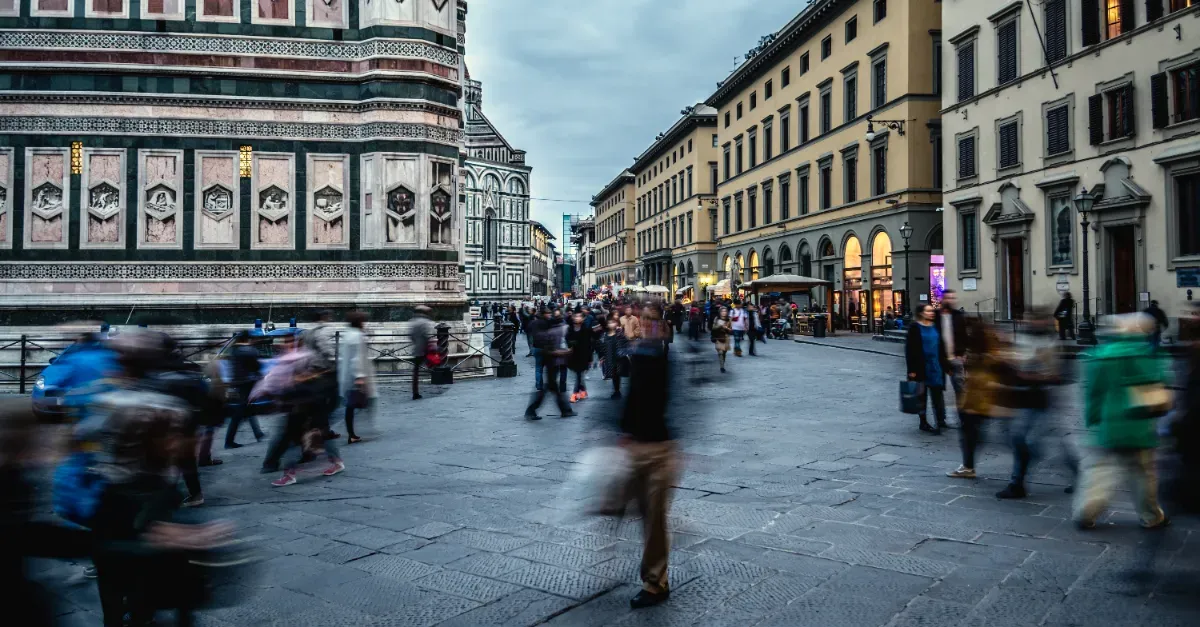
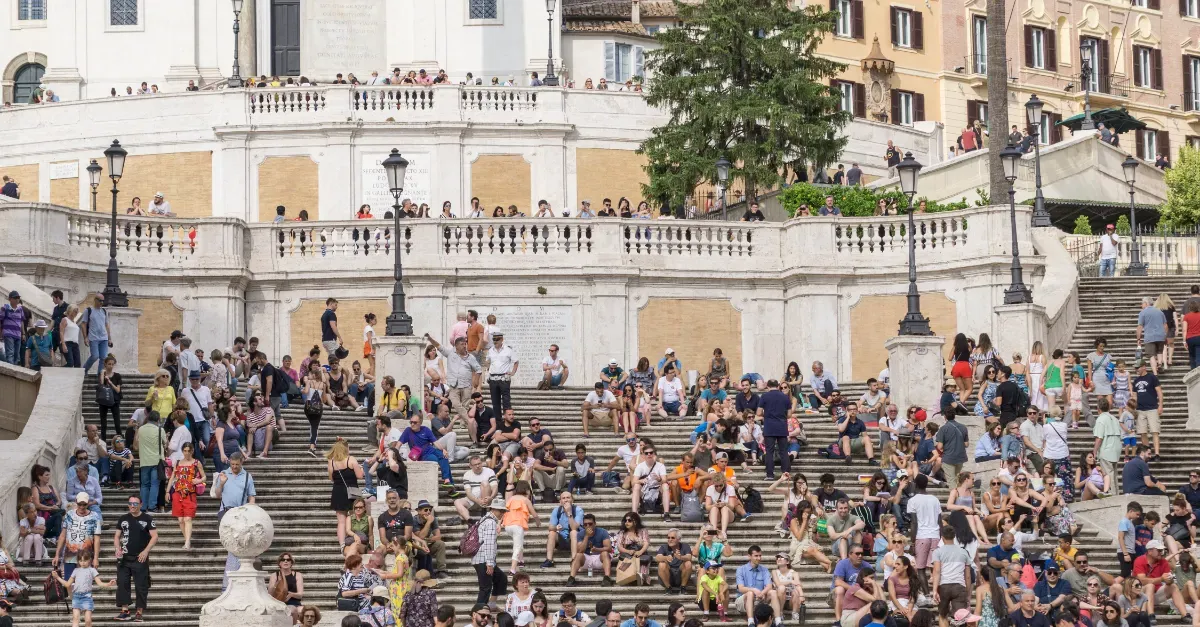
Can we still speak of sustainable tourism when the historic centres of art cities are overrun by crowds of visitors, the cost of living pushes residents to move elsewhere, and cultural identity bends to the logic of the tourist market?
These are some of the questions at the heart of the G7 Tourism Ministers’ Meeting, held in Florence from 13 to 15 November 2024. An important summit, which discussed the current model of tourism development, all too often geared towards quantity rather than quality.
The G7 agenda, as ever ambitious, addressed themes such as sustainable tourism, the regulation of short-term rentals, the digitalisation of tourist flows and overtourism. Good intentions, certainly, but will they be enough to relieve cities of the growing pressure of mass tourism?
Overtourism: when tourism becomes a problem
Overtourism. A term we now know well, and which no longer describes only the crowds in front of the Leaning Tower of Pisa or in Piazza San Marco. It is a phenomenon that undermines the very foundations of urban liveability, turning historic cities into theme parks for tourists.
Show moreShow less
The figures speak for themselves: Italy is one of the most visited destinations in the world, and that is a good thing, but almost the entire tourist flow is concentrated in a few cities, causing overcrowding that puts cultural heritage, the environment and residents’ quality of life at risk. In 2023, Rome alone recorded a record number of visitors, just under 50 million.
In Florence, the symbolic city of the 2024 G7, there has been a sharp increase in ‘occasional’ tourists over the past twenty years. One of the causes is short-term rentals and the massive use of home-sharing platforms, which have made it, to say the least, difficult for Florentines to live in the heart of their own city. As a result, properties intended for tourist use have increased enormously within a few years, reducing the stock of properties available for permanent housing.
To tackle these problems, the City of Florence has presented a plan in ten points. The measures include:
An end to key boxes: installing them on historic buildings is banned, to curb the proliferation of unregulated short-term rentals.
A ban on loudspeakers for tour guides: a way to reduce noise pollution and improve the visitor experience.
Promotion of alternative routes: the aim is to spread tourist flows across less well-trodden areas, highlighting places that are less well known but just as significant.
Are these measures enough? Probably not, but they represent a step in the right direction.
International examples: Venice and Amsterdam
While Florence experiments, other cities have already adopted drastic measures to tackle overtourism. Venice, for example, has introduced an entry fee for day visitors and has limited the size of tour groups.
Amsterdam has decided to go further: no new hotels in the centre, a ban on Airbnb in some areas and restrictions on cruise ships. The result? A city that is reclaiming its living space, though not without controversy.
Sustainable tourism is under discussion, but a shared vision is missing
Can we really speak of sustainable tourism without a regulatory framework that goes beyond national borders? For now, European cities seem to be tackling the problem in an uncoordinated way, each with its own solutions, often different and in some cases incompatible with one another.
The tourism we (really) want
The crucial question to emerge from the 2024 G7 Tourism Ministers’ Meeting concerns not only the management of tourist flows, but the very model of tourism we want for the future. It is a matter of choosing: do we want tourism that enriches cities, respecting their rhythms, their residents and their cultural heritage? Or tourism that merely consumes, leaving behind little more than photos and rubbish?
Because, let us be clear, while tourism is an essential economic engine, it is equally true that, if poorly managed, it risks destroying the very thing that makes these cities so unique.
Florence, Venice, Barcelona: art cities are always on the front line in dealing with mass tourism, sometimes without adequate support. We cannot keep leaving individual cities to fight this battle. We need common strategies, shared rules and, above all, a concrete commitment to putting sustainability at the centre of every choice.
On the positive side, the Florence G7 gave some encouraging signals, but some shadows remain. One thing is certain, however: the first step in solving a problem is acknowledging that it exists. In this, Florence has shown that cities can be not only victims, but also examples of resilience and innovation.