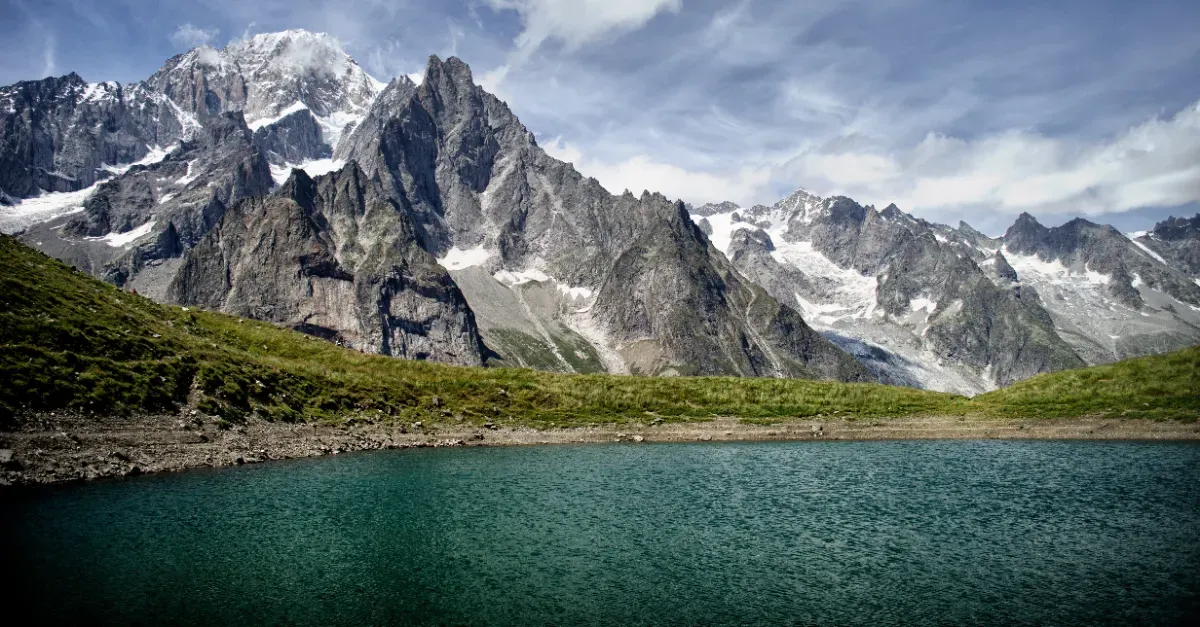
It is therefore a diverse network that makes it possible to tackle the environmental, social and economic challenges of the Alps from an integrated, transnational perspective. A network, then, in which every strand plays a crucial role in coordinating and promoting initiatives for sustainability and the protection of the Alpine environment.
CIPRA International: what does it do?
CIPRA International (www.cipra.org) is, then, the main head of the network, its centre, from which the national representative offices branch out. It therefore has a fundamental role of coordination and guidance, and deals with many aspects of Alpine sustainability.
Its main objectives are the protection of biodiversity, the promotion of the sustainable use of natural resources, adaptation to climate change and support for local communities. The work to ensure that the Alps remain a vital and liveable place, not only for the people who live there but also for the many animal and plant species that inhabit them, is constant and ongoing.
CIPRA International has many projects under way. Central Mountains (www.cipra.org - Central Mountains), active until March 2026, for example, aims to strengthen the transfer of knowledge between the Alps and the Carpathians, promoting the sustainable, cross-border development of the mountain regions of Central Europe. Coordinated by CIPRA International Lab, Central Mountains involves partners from Poland, Slovakia, Hungary, the Czech Republic, Romania, Italy and Austria, and has the support, including financial support, of Europe.
Its objectives include drawing up a common strategy for the sustainable development of mountain areas, creating action plans for greener tourism, involving citizens in decision-making processes and public-private cooperation. The planned activities include study trips, touring and public promotional campaigns, and the testing of new governance structures and cross-border functional areas.
PietrePreziose: Vita e natura a profusione (www.cipra.org - PietrePreziose), on the other hand, aims to enhance traditional elements of the Alpine cultural landscape, such as stone heaps and dry-stone walls, created by gathering the stones that surfaced during ploughing, which have characterised the Alps for centuries. Because of increasingly intensive agriculture and a poor understanding of their value, heaps and walls are unfortunately gradually disappearing, causing considerable damage to biodiversity. These spontaneous structures are, in fact, vital habitats for animals and plants that prefer sheltered, warm conditions.
PietrePreziose is therefore trying to reverse the trend, involving residents of six pilot regions across the Alpine arc in building stone heaps and dry-stone walls under the guidance of experts. At the same time, groups of researchers are studying the biodiversity hosted by these piles, and young artists, inspired by the research findings, are creating artistic works such as videos or postcards, with the aim of promoting biodiversity and the conservation of these cultural elements of the landscape.
And CIPRA Italia?
CIPRA Italia too, whose office, chaired by Dr Vanda Bonardo, is in Turin, has among its main objectives the conservation of biodiversity, the promotion of sustainable farming practices, the management of water resources, and adaptation to climate change (www.cipra.org - CIPRA Italia).
Concrete projects, awareness-raising campaigns and educational activities are the order of the day: recently, for example, CIPRA Italia made its voice heard on the Milano-Cortina 2026 Olympic and Paralympic Games, taking part in the launch of the civic monitoring campaign Open Olympics 2026.
Through this campaign, a network of 20 associations, including CIPRA Italia, has asked those responsible for the Olympic Games for clear accountability. The aim is to obtain transparency, legality and accountability for an event that has raised, and still raises, concerns from at least three points of view: environmental, urban planning and social.
[for more information: www.greentomeet.com - Milano Cortina 2026: al via una campagna internazionale di monitoraggio civico]
Ultimately, the importance of CIPRA International and its branches lies in its ability to join forces at local and international level to face the environmental challenges of the Alps. In an age of accelerating climate change and growing human pressure, CIPRA’s work is essential to ensure that the mountain range continues to be a place of natural beauty, biodiversity and cultural richness. Thanks to CIPRA’s commitment, the Alps can live on and endure, offering shelter, resources and inspiration to the species that inhabit them and to present and future generations.