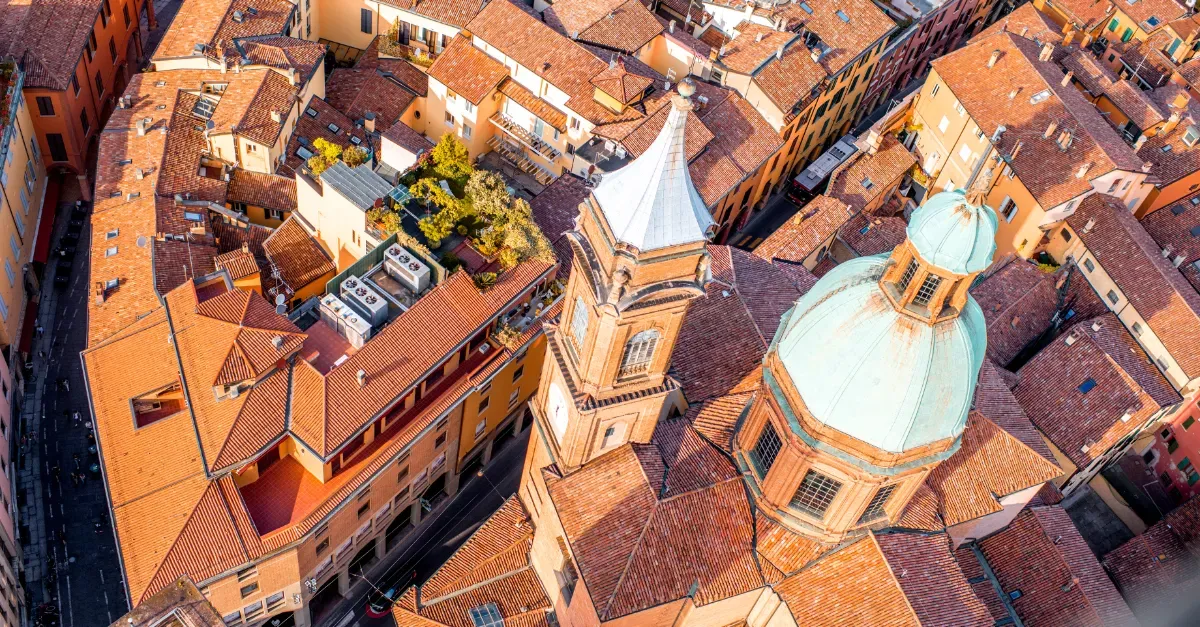
Let us look at the impact on traffic. Vehicle traffic has fallen only slightly (-3%), but the figure for the pollution most closely linked to urban traffic shows a more significant decrease: -23%.
There has also been a real boom in the use of bike sharing: +92%. Overall, journeys by bicycle have risen by 12%; in addition, journeys by public transport have consolidated.
The data recorded by the council of the Emilian regional capital, meanwhile, contradict the claims (also taken up in recent months by leading political figures) that the 30 km/h limit would cause an increase in polluting emissions.
The council reports, overall of course, a 23.1% decrease in the level of NO2 (nitrogen dioxide) at the ARPAE monitoring station at Porta San Felice compared with the average for the same periods in 2022-2023. In absolute terms, the council says, it is the lowest figure in the last 8 years. In percentage terms, it is the sharpest annual and two-year fall since 2017 (with the sole exception of 2020, a year affected by Covid).
Nitrogen dioxide comes primarily from the emissions of internal combustion vehicles and from heating, and remains more concentrated close to the main sources of emissions, in particular heavily trafficked roads and the built-up area.
If confirmation were needed that excessive speed is the leading cause of road accidents (and that reducing speed therefore has a considerable impact on safety), the analysis of the breaches of the highway code’s rules of conduct recorded by the Bologna local police at road accidents between 1 January and 12 July 2024 speaks for itself. Excessive speed is clearly at the top of the list (43.6%). It is followed by failure to give way to motor vehicles, bicycles and pedestrians (20.5%), incorrect manoeuvres (10.6%), failure to observe traffic lights and road markings and signs (8%), and driving under the influence of alcohol or drugs (4.7%).
For the “long-standing” supporters of Città 30 such as Legambiente, the Bologna data are a great confirmation. “The data confirm, unequivocally, that the Città 30 formula can deliver positive, immediate and tangible results,” said Simone Nuglio, Coordinator of Legambiente’s national mobility office.
“A 38% reduction in serious accidents, 33% fewer deaths and a significant cut in polluting emissions, amounting to 23%. A balance sheet that confirms how complex, cross-cutting mobility policies such as Città 30, although divisive among the public and sometimes counterintuitive (going slower means arriving sooner), can in fact bring a substantial improvement to citizens’ lives, marked by greater safety on the road, good air quality and a redistribution of space, an incentive to use local public transport and, in general, a better quality of life.”