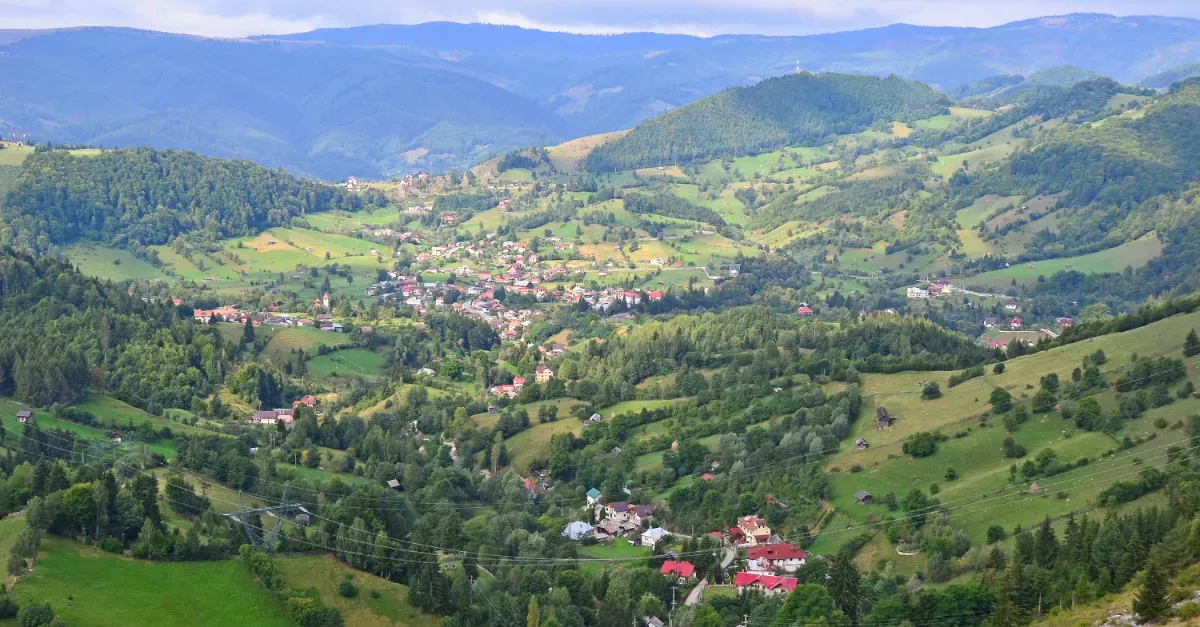
But now the FCC’s ambition is even greater: to create the largest forest national park on the continent. A nature reserve of 200,000 hectares (500,000 acres). As has been aptly said, a Yellowstone for Europe.
Romania has more than 6 million hectares of forest. A significant part is still ‘virgin’, that is, free of human settlements, and it holds some of the few areas of ancient forest left in Europe.
Set against this natural good fortune is the phenomenon of illegal logging, which over the years has wiped out vast areas of forest in Romania and still continues its baleful work.
So, in 2009, the FCC’s founding biologists, Christoph and Barbara Promberger, formed a team of philanthropists and environmentalists and raised funds to buy tracts of forest to stop the logging, as well as to purchase areas to be reforested.
From the outset, the plan was to create an area ‘large enough to host a significant number of large carnivores and to allow evolutionary processes to take place’.
To date, the land purchased and protected amounts to as many as 26,900 hectares of forest and grassland, and more than 4 million new trees have been planted. The FCC has also bought the hunting rights to another 78,000 hectares, to protect wildlife from trophy hunters.
Involving local communities, creating jobs and increasing the number of visitors to the area are the other side of the project and an equally important goal.
Already, thanks to campsites and mountain huts, guided hikers can reach the foothills of the Făgăraș mountains and come across some extraordinary specimens of wildlife (including brown bears, for which no attack on visitors has been reported). It is safe to believe that, once the project is completed, the European Yellowstone will offer hikers a truly dense map of possible routes and experiences.
As well as providing employment in roles ranging from rangers to tree planters, the FCC has created a ‘food hub’ in the area for small local producers, who can sell their products. During their stay, guests can already enjoy delicious cheeses, zacusca (a spread of aubergines and peppers), jams and honey.
Seminars and workshops are also organised to explain the work being done. It all comes together at the Făgăraș Fest, a free event now in its fourth edition, held this year in Porumbacu de Sus, Sibiu, from 26 to 28 July, with workshops, local food and live music. One to put in the diary, for a decidedly new kind of mountain holiday.