The document, with its 30 articles, sets out the fundamental rights that must be universally protected, including the right to life, liberty, personal security and equality before the law. It is a text that transcends cultural, political and religious barriers, outlining a common ideal of dignity and justice for all human beings.
https://www.amnesty.ch/it/news/2008/l-anniversario-dei-diritti-umani/i-30-articoli-della-dichiarazione-dei-diritti-umani
Today, on the 75th anniversary of the Declaration, it is essential to reflect on its achievements and on the areas where the world still has progress to make. Despite considerable developments, many people around the world continue to experience discrimination, violence and the denial of their fundamental rights.
One of the main obstacles to the implementation of the UDHR is inequality. Economic, social and gender inequality remains a significant problem, with millions of people living in extreme poverty and deprivation.
The right to education, although recognised by the Declaration, is still out of reach for many, especially in regions devastated by war, poverty and political crises.
Climate change is another critical challenge for human rights. Its implications go beyond the environment, affecting the right to water, food, health and even survival. The most vulnerable communities, often already marginalised, are those that suffer the most severe impacts of climate change.
Technological progress has also brought new challenges. The advent of artificial intelligence, digital surveillance and large-scale data collection raise questions about privacy, freedom of expression and non-discrimination. The need to regulate and monitor the use of technologies to ensure respect for rights has become increasingly urgent.
Armed conflicts continue to be a source of serious human rights violations. In numerous regions, conflicts cause death, suffering and the forced displacement of populations, often with consequences that last for generations. Respect for international humanitarian law and the protection of civilians in wartime remain crucial challenges.
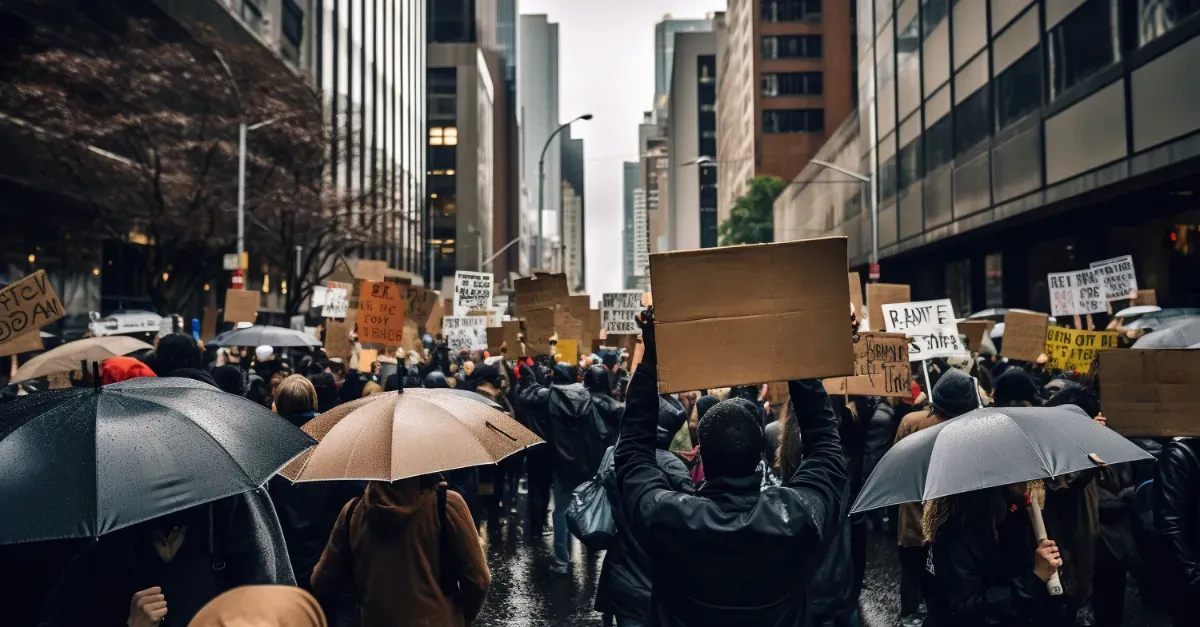
Civil rights movements, such as Black Lives Matter and the struggles for LGBTQ+ rights, have gained momentum around the world, underlining the continuing importance of the fight against discrimination and for equality. These movements draw attention to the need to recognise and tackle deep-rooted, systemic forms of discrimination.
Women continue to fight for gender equality and against gender-based violence. Despite significant progress, discrimination remains pervasive, with violations ranging from the pay gap to domestic violence, attacks on reproductive rights and the constant toll of femicide.
Children’s rights, although explicitly recognised in the Declaration, are often violated. Access to education and protection from violence and exploitation are urgent issues. In particular, child labour and the abuse of children in contexts of war and poverty call for decisive action.
The rights of refugees and migrants are a matter of growing importance in the global context. The need to protect these vulnerable people, guaranteeing them safety, dignity and access to fundamental rights, is a challenge that the world must face together.
Finally, freedom of expression and freedom of the press are increasingly under pressure. In many parts of the world, journalists face censorship, intimidation and violence for their work. Protecting these rights is essential to maintaining a free and informed society.
As the world moves on, it is clear that the Universal Declaration of Human Rights is not just a historical document, but a living guide that demands constant commitment.
The fight for human rights is a work in progress, a commitment that requires the vigilance and action of every individual, community and nation. Now more than ever.